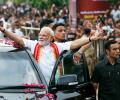
'Non-BJP state governments and their leaders, navigating today's political landscape, know well they have no clue what awaits around the corner.' 'The chances of charges pressed and oneself getting parked in custody play out on an uneven playing field,' points out Shyam G Menon.

'Pakistan wanted India out of Afghanistan to which again the Taliban told Pakistan to take a walk.' 'Six months after they came back to power in 2021 India was back in Afghanistan at the request of the Taliban.' 'The Taliban realised that India has no agenda of its own in Afghanistan.'
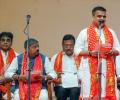
'The BJP's top leadership realised that their cadres are not happy with them, so they changed the ministers and got in new faces.'

'Discontent is deepest among young people.' 'They are weary of inequality, exclusion, and empty promises.'
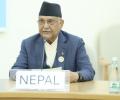
Oli stepped down shortly after hundreds of demonstrators entered his office shouting anti-government slogans.
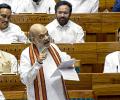
'This type of comprehensive legislation has never been introduced before in Parliament's history.' 'A bill that simultaneously affects ministers, chief ministers, and the prime minister represents completely uncharted Constitutional territory.' 'Throughout our nation's legislative history, the established policy has consistently held that public office holders should face punishment only after receiving conviction from a competent court of law. Without this safeguard, we risk systematic destabilisation, and our federal structure would face complete collapse.' 'Any central government could potentially deploy this legislation against state governments they oppose politically. This represents the most frightening prospect and dangerous possibility that these bills create.'

'I want to ask the entire nation and the opposition. Can a Chief Minister, Prime Minister, or any leader run the country from jail?'

The National Sports Governance Bill has become an Act after President Droupadi Murmu gave her assent to the landmark legislation that promises to revamp India's sports administration.

Mrs Gandhi's power ebbed and peaked with the times. Mr Modi's has almost been constant, barring the few months of hard dip after the 240 seats of 2024, points out Shekhar Gupta.

When the government chooses to either ignore or use identity documents only when it suits them, it shakes people's sense of stability, notes Shyam G Menon.
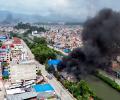
'9 September saw Kathmandu and other key cities under the control of goons.' 'There was no authority, the police was nowhere.' 'The crowds torched all three centres of the state -- the supreme court, parliament and the Singha Durbar government headquarters.' 'The army stayed aloof from the complete destruction of these edifices, which is less than a kilometre from its headquarters.'
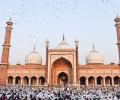
'Only because of the absence of a dedication record in writing, how can such properties be treated as located on misappropriated government land?'
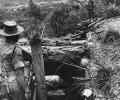
On November 18, 1962, 114 soldiers of the 13th Kumaon fought till the last man, and last bullet, in sub-zero temperatures, to beat back the huge Chinese army. We salute the Heroes of Rezang La.
When the government chooses to either ignore or use identity documents only when it suits them, it shakes people's sense of stability, notes Shyam G Menon.
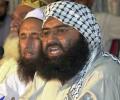
In a viral video uploaded to a YouTube channel on Tuesday, JeM commander Ilyas Kashmiri can be heard fuming over the Indian attack that killed the family members of Azhar and also bragging about fighting in neighbouring countries for Pakistan.

The home ministry said the central government would continue to welcome the discussion with LAB and KDA through the high powered committee on Ladakh or any such platform.

The Supreme Court is examining the extent to which courts can intervene when governors delay or refuse to act on bills passed by state assemblies. The court questioned the Centre on whether judicial review is barred in cases of gubernatorial inaction, sparking debate on the balance of power between states and the central government.
Correction of India's ills requires focussed direction of our energy. For this, we need a collective Conscience. We need Commitment. We need Cleanliness. We need Cooperation. We need Collaboration. We need Courtesy. And, we need enlightened Conversation, asserts Biswajit Dasgupta.

Learning from East Asia, India must reform its district administration with performance, accountability, and vision to achieve the goal of Viksit Bharat, points out Deepak Mishra.

France today increasingly resembles the Italy of the past, when governments fell with bewildering regularity, prime ministers came and went in rapid succession, and political instability became the norm rather than the exception, point out Krishnan Srinivasan and Manoj Mohanka.

The 21-month-long Emergency also saw the government amend the Constitution several times, including to keep the elections to the offices of President, Vice President, Prime Minister and Speaker beyond the scrutiny of courts and insert the words 'socialist', 'secular' and 'integrity' in the Preamble.

Union Home Minister Amit Shah introduced bills in Lok Sabha addressing the removal of arrested PMs, CMs, and ministers, sparking opposition protests. Shah emphasized the need for public decision on whether leaders should govern from jail, criticizing the Congress party's stance on the matter.
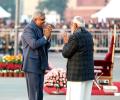
The BJP had no option but to get Jagdeep Dhankhar out of its way for the sake of the Modi government's stability, reveals Sheela Bhatt, the legendary political journalist.
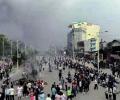
'They mean business, but business as usual is unacceptable to them'

'Even if this Bill passes in Parliament, it will reasonably face judicial scrutiny. 'One can reasonably expect challenges in the Supreme Court questioning its Constitutional validity.'

India's global chess domination was lauded by President Droupadi Murmu in her address to the nation on Thursday

A profile of B Sudershan Reddy, former Supreme Court judge and Opposition's vice presidential candidate, highlighting his career, judgments, and contributions to constitutional law.

The increased numbers of the Opposition bloc would mean that their MPs are likely to head several more panels than the four that they did by the end of the term of the 17th Lok Sabha.

The Supreme Court dismissed Allahabad High Court judge Yashwant Varma's plea seeking invalidation of a report that found him guilty of misconduct in the cash discovery row.
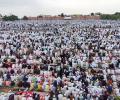
'We are not all Abduls, you know. Our community has any number of retired civil and defence officers, doctors, engineers, lawyers.'
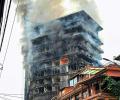
'This escalation was definitely not part of Gen Z's plan. It seems now that these external forces were keenly observing the initial developments from the sidelines and jumped into the fray, taking advantage of the situation, finding that the time was suitable for such acts'

Roger Binny, if BCCI state unit members agree, can continue till 75 which is now the cut-off age for office bearers of National Sports Federations

Monday's protests in Nepal may become the forerunner to many more agitations in future since social media interests and national efforts to regulate them will often be in conflict, alerts Biswajit Dasgupta.

Parliament introduces a new 'Health Menu' featuring millet-based dishes, salads, and lean protein options to promote healthier eating habits among lawmakers, officials, and visitors.

A Muslim cleric has been booked for allegedly making objectionable and inflammatory remarks against Samajwadi Party MP Dimple Yadav during a televised debate.
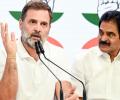
Congress leader Rahul Gandhi and other UDF MPs protest the arrest of Catholic nuns in Chhattisgarh, alleging religious persecution by the BJP government and demanding their immediate release.

'I dreaded meeting him these days because every time he'd say: We have to fight this government, even if it means going to jail.' 'He'd been in jails run by the British, he'd also been in jails in independent India, now he was ready to go to jail under this government.'

On his 200th birth anniversary, Utkarsh Mishra traces the life, thought, and legacy of Dadabhai Naoroji, the Grand Old Man of India.

The GenZ violence that engulfed Nepal is not only against nepo-babies -- its anger is broader and riddled with contradictions, making it difficult for interim PM Sushila Karki, points out Aditi Phadnis.

Victory wrested from regime that only listens when forced, the TMC said on GST exemption on insurance.
